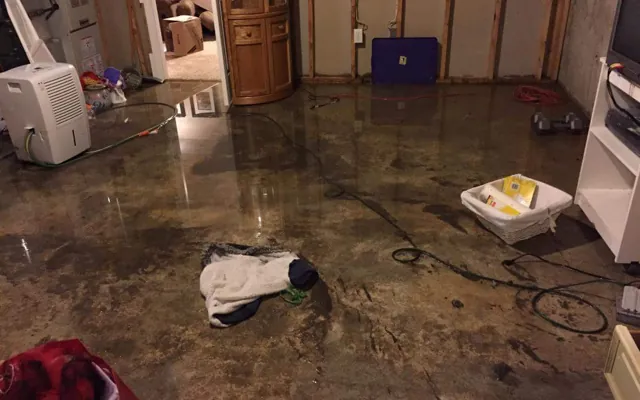
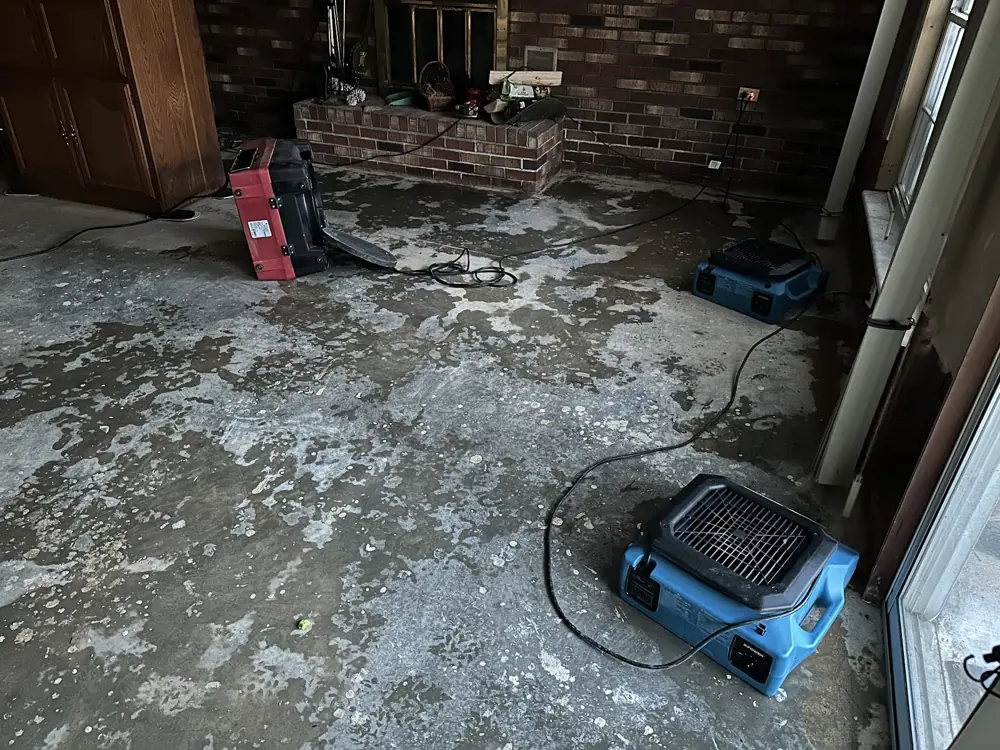
A corroded tank can fail all at once and send gallons across the garage or ceiling below. Damp Solving Water and Mold responds across Orlando in about an hour, IICRC-standard and local.

Crews shut off the water supply and, for electric units, the power to stop the leak safely before extraction begins.
Standing water is extracted from the garage, attic, or affected room, along with any area the water traveled to.
Crews check adjoining walls, flooring, and ceiling drywall for hidden moisture and run drying equipment until readings are normal.
Crews coordinate with a plumber for water heater replacement and rebuild any affected drywall, insulation, or flooring.

While help is on the way, these first steps, done only where it is safe, limit the damage and protect the insurance claim.
Shut the supply off at the source, or close the home's main valve if the source is not obvious. Stopping the flow limits the damage more than anything else.
Switch off electricity to the affected area, but only if the breaker can be reached without standing in or touching the water.
Get a crew dispatched right away. The sooner extraction and drying begin, the more flooring, drywall, and belongings can be saved.
Take photos and a short video of the water and the affected rooms before anything is moved, so the insurance claim starts strong.
Water heater leak cleanup in Orlando typically runs $500 to $2,000 for a contained garage event, and can reach $2,500 to $6,000 for attic units that damage ceiling drywall and insulation in the room below. Water heater replacement is billed separately by a plumber and generally runs $1,200 to $2,500. Sudden tank failure is commonly covered by homeowners insurance, and crews document the failed unit to support your claim.
Crews reach Orlando and Central Florida fast, from Winter Park and College Park to Lake Nona, Dr. Phillips, Conway, and nearby Maitland and Altamonte Springs. See the full list on the areas served across Orlando page.
See all areas servedEvery loss is photographed, measured, and logged from the first visit, so the paperwork holds up with your insurance carrier.
Technicians follow recognized IICRC drying standards and prove the work with daily moisture readings, not guesswork.
Emergency dispatch any hour of the day or night, with a real crew on the way, not a callback in the morning.
A real crew dispatched any hour, not a callback in the morning.
Trained technicians following recognized IICRC drying standards.
Truck-mounted, portable, and submersible for any size loss.
The loss is documented and billed to the carrier directly.
Most tank water heaters last eight to twelve years, and units approaching that age are more likely to fail suddenly, often at a corroded seam or fitting, without much warning beforehand.
Yes, especially for attic-installed units, where a drip pan with a drain line routed outside can catch a slow leak before it damages the ceiling below. Garage units benefit from one as well, though the floor slopes away from living space in most homes.
Sudden tank failure or rupture is generally covered as accidental water damage under most homeowners policies. Damage from a leak that was visibly ignored for a long period may be treated differently, so quick response matters.
Not until the water heater is repaired or replaced and the water supply to it is restored safely. Crews can advise on timeline once a plumber has assessed the unit.
It depends on the leak size, but a significant rupture can stain and sag a ceiling within hours, while a slow leak might take days or weeks to show a visible stain, by which point insulation above may already be saturated.
Orlando crews are on call 24 hours a day, local and fast, and can be on the way within the hour.
Call (689) 308-3723