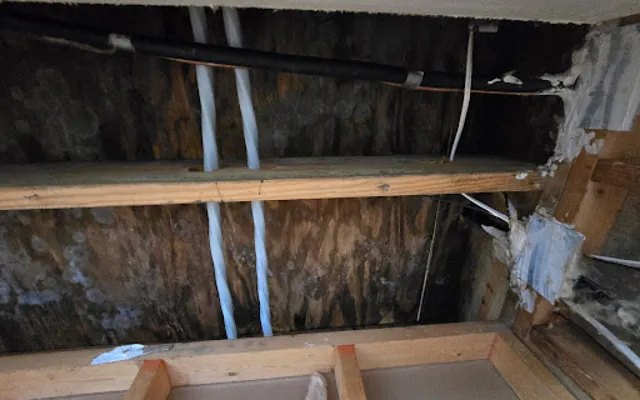
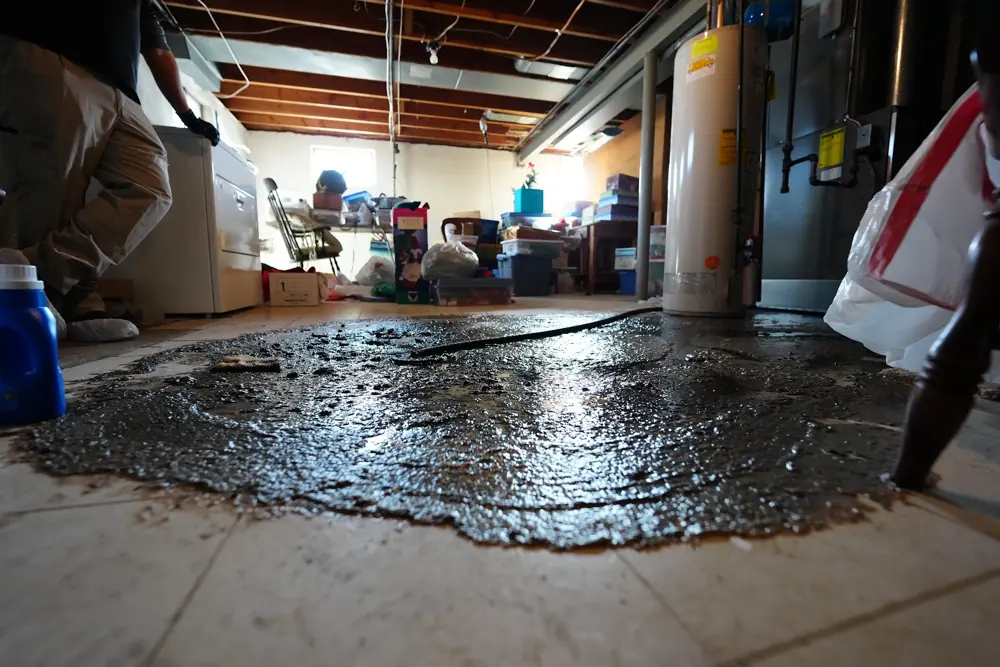
Wind-driven rain from a tropical storm can push water past shingles and tile in minutes. Damp Solving Water and Mold responds across Orlando in about an hour, IICRC-standard and local.

If active rain is still entering, crews place a tarp or temporary cover and stop water intrusion before drying begins.
Crews extract standing water from attic and living spaces and check drywall, insulation, and framing for saturation.
Air movers and dehumidifiers dry attic insulation, roof decking, and ceiling drywall, with moisture tracked until levels are safe.
Crews coordinate ceiling drywall repair, insulation replacement, and connect you with a roofer for the permanent roof repair.

While help is on the way, these first steps, done only where it is safe, limit the damage and protect the insurance claim.
Shut the supply off at the source, or close the home's main valve if the source is not obvious. Stopping the flow limits the damage more than anything else.
Switch off electricity to the affected area, but only if the breaker can be reached without standing in or touching the water.
Get a crew dispatched right away. The sooner extraction and drying begin, the more flooring, drywall, and belongings can be saved.
Take photos and a short video of the water and the affected rooms before anything is moved, so the insurance claim starts strong.
Roof leak water damage cleanup in Orlando typically runs $800 to $3,500 for drying and minor drywall or insulation repair, and can reach $5,000 to $10,000 or more when ceilings collapse or multiple rooms are affected after a hurricane. Actual roof repair is billed separately by your roofing contractor. Storm-related roof leaks are usually covered by homeowners insurance, and crews document the intrusion point to support that claim.
Crews reach Orlando and Central Florida fast, from Winter Park and College Park to Lake Nona, Dr. Phillips, Conway, and nearby Maitland and Altamonte Springs. See the full list on the areas served across Orlando page.
See all areas servedEvery loss is photographed, measured, and logged from the first visit, so the paperwork holds up with your insurance carrier.
Technicians follow recognized IICRC drying standards and prove the work with daily moisture readings, not guesswork.
Emergency dispatch any hour of the day or night, with a real crew on the way, not a callback in the morning.
A real crew dispatched any hour, not a callback in the morning.
Trained technicians following recognized IICRC drying standards.
Truck-mounted, portable, and submersible for any size loss.
The loss is documented and billed to the carrier directly.
Watch for brown or yellow stains spreading across the ceiling, peeling paint, a musty smell in upper rooms, or visible water on the attic floor. Wind-driven leaks during a storm can also show up as damp spots on walls near the ceiling line.
Both, generally at the same time. Crews stop the interior damage with tarping and drying while a professional roofer handles the actual shingle, tile, or flashing repair, and crews can coordinate that coordination for you.
Most homeowners policies cover sudden roof leaks from wind and storm damage, though separate windstorm deductibles are common in Florida. Crews provide the documentation your adjuster needs to evaluate the claim.
Wet batt insulation usually needs to be replaced rather than dried in place, since it loses its effectiveness and can hold moisture against the roof deck. Blown-in insulation is evaluated case by case.
Given Orlando's humidity, mold can begin forming in wet insulation or drywall within about 48 hours. That is why crews prioritize extraction and drying immediately after the leak is stopped.
Orlando crews are on call 24 hours a day, local and fast, and can be on the way within the hour.
Call (689) 308-3723