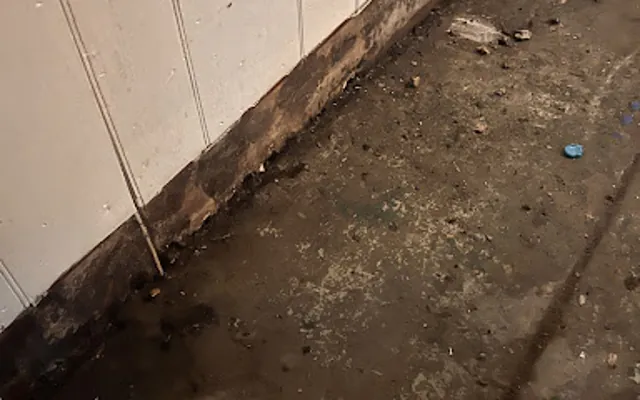
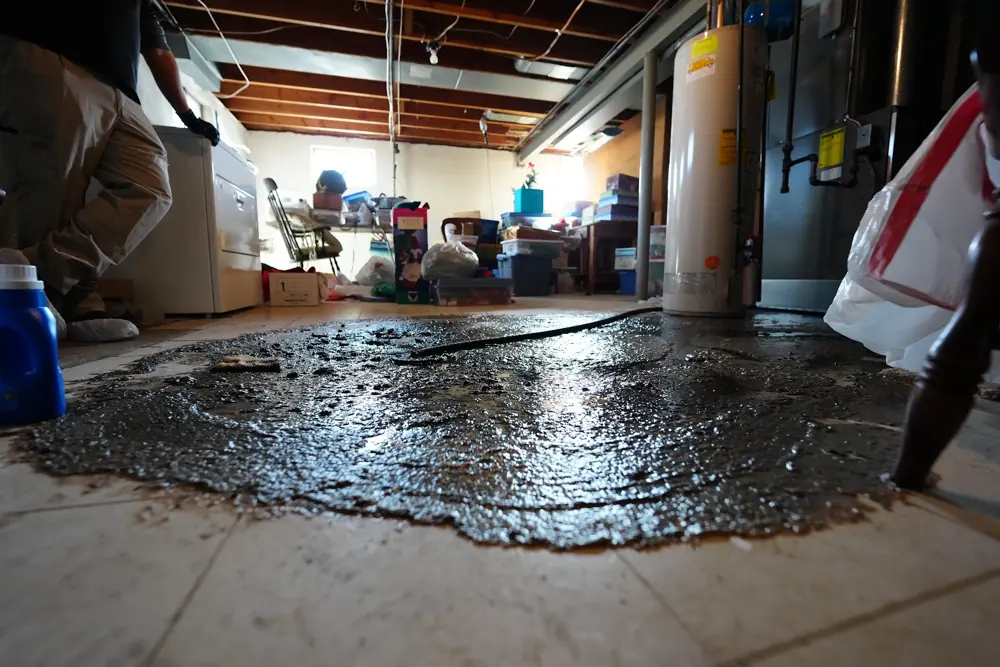
Sewage backing up through a drain is a health hazard, not just a mess. Damp Solving Water and Mold reaches most Orlando homes in about an hour, IICRC-standard and local.

Crews isolate the affected area to prevent contaminated water from spreading to unaffected rooms during extraction.
Contaminated water is extracted and saturated porous materials are removed and disposed of per category 3 protocols.
Affected surfaces and subfloor are disinfected with hospital-grade antimicrobial and treated to eliminate sewage odor.
Crews dry the structure fully and verify with moisture readings and air quality checks before calling the space safe.

While help is on the way, these first steps, done only where it is safe, limit the damage and protect the insurance claim.
Shut the supply off at the source, or close the home's main valve if the source is not obvious. Stopping the flow limits the damage more than anything else.
Switch off electricity to the affected area, but only if the breaker can be reached without standing in or touching the water.
Get a crew dispatched right away. The sooner extraction and drying begin, the more flooring, drywall, and belongings can be saved.
Take photos and a short video of the water and the affected rooms before anything is moved, so the insurance claim starts strong.
Sewage backup cleanup in Orlando typically runs $1,500 to $5,500 depending on how many rooms were affected and how much contaminated material had to be removed and disposed of. Larger backups reaching finished basements are not a factor here since Orlando homes sit on slab, but multi-room events in single-story homes can still push toward the higher end. Many homeowners policies cover sewage backup with an added rider; crews document everything to support your claim.
Crews reach Orlando and Central Florida fast, from Winter Park and College Park to Lake Nona, Dr. Phillips, Conway, and nearby Maitland and Altamonte Springs. See the full list on the areas served across Orlando page.
See all areas servedEvery loss is photographed, measured, and logged from the first visit, so the paperwork holds up with your insurance carrier.
Technicians follow recognized IICRC drying standards and prove the work with daily moisture readings, not guesswork.
Emergency dispatch any hour of the day or night, with a real crew on the way, not a callback in the morning.
A real crew dispatched any hour, not a callback in the morning.
Trained technicians following recognized IICRC drying standards.
Truck-mounted, portable, and submersible for any size loss.
The loss is documented and billed to the carrier directly.
Crews do not recommend it. Raw sewage carries bacteria and pathogens that require protective equipment and hospital-grade disinfectant to handle safely. DIY cleanup often leaves contamination behind in porous materials that looked fine on the surface.
If only your home is affected and a plumber's camera finds the clog on your property, it is a private line issue. If neighbors on the same street report backups at the same time, city sewer infiltration or a main line problem is more likely.
Porous materials that contacted sewage, carpet, carpet pad, drywall below the waterline, and often subfloor, generally need to be removed and disposed of. Hard, non-porous surfaces like tile and sealed concrete can usually be disinfected and kept.
Standard policies often exclude sewer backup unless you have added a specific rider or endorsement. Check your policy or ask your agent; crews provide the documentation needed either way to support a claim.
Odor typically clears within a few days once contaminated materials are removed and the space is disinfected and dried. Lingering smell after drying can mean hidden contamination that needs another look.
Orlando crews are on call 24 hours a day, local and fast, and can be on the way within the hour.
Call (689) 308-3723