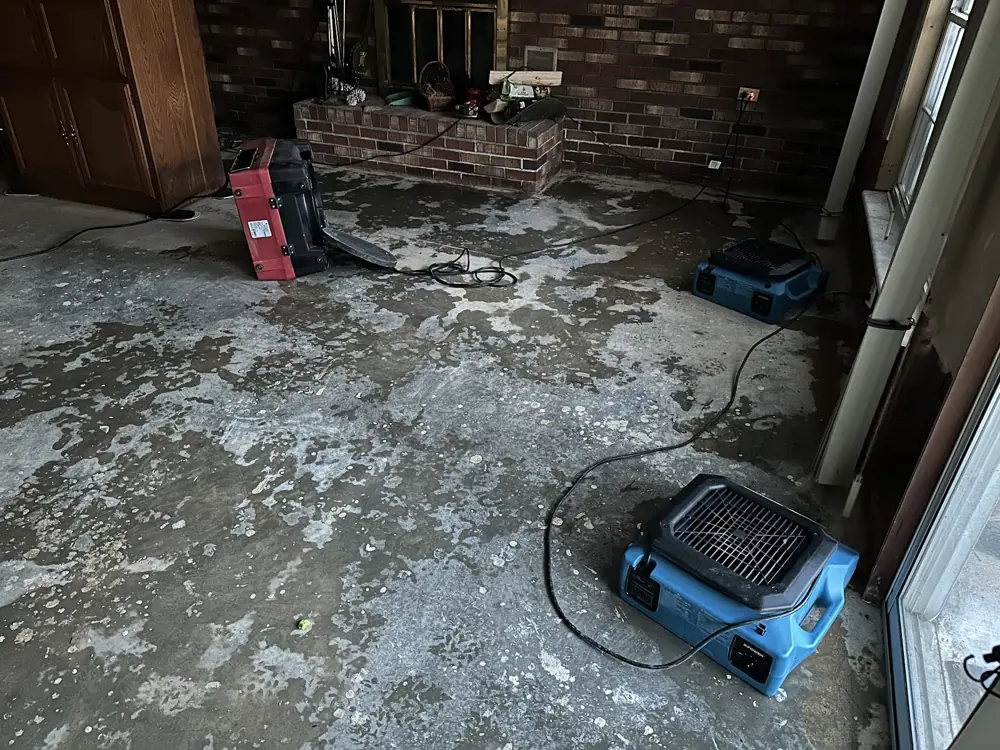
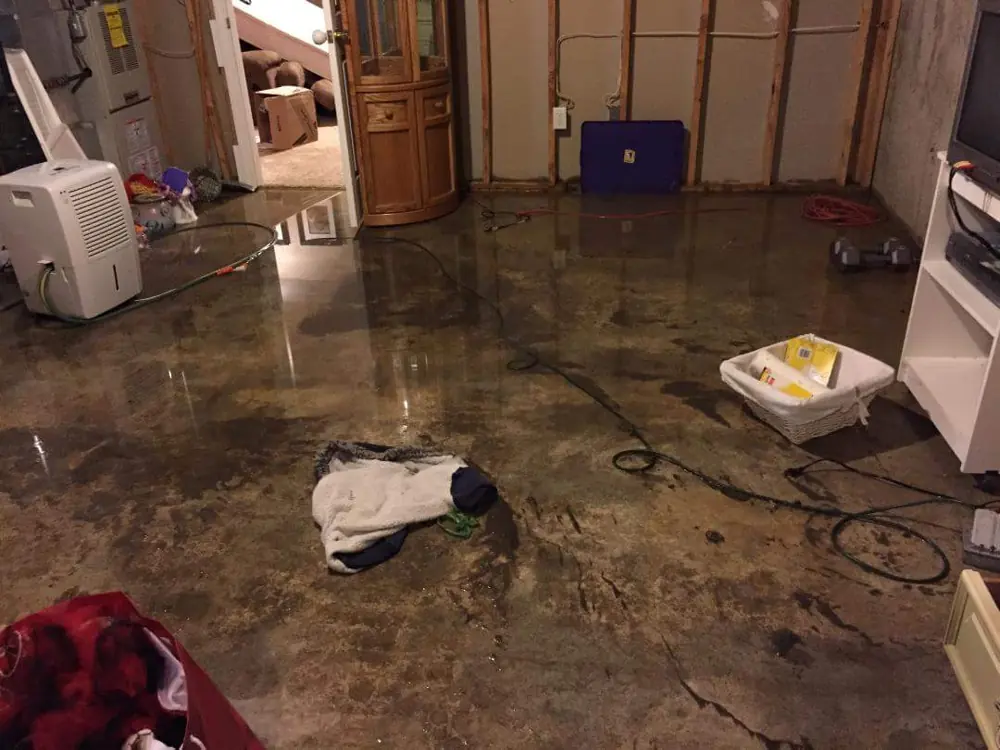
Wind-driven rain, a failed water heater, or storm runoff can send water across an Orlando garage floor fast. Damp Solving Water & Mold's IICRC-standard crews respond in about an hour to extract and dry.

Crews confirm whether the water is from storm intrusion or a plumbing failure first, then extract standing water from the slab as quickly as possible.
Baseboards, drywall, and stored items along the garage walls are checked carefully for moisture and separated from the dry items nearby as needed each time.
Air movers and dehumidifiers are set to dry the concrete slab fully and any wet drywall or baseboard running along the surrounding garage walls too.
Damaged drywall or baseboard is replaced to closely match the original, and crews can recommend a door threshold seal to reduce future storm water intrusion.

While help is on the way, these first steps, done only where it is safe, limit the damage and protect the insurance claim.
Shut the supply off at the source, or close the home's main valve if the source is not obvious. Stopping the flow limits the damage more than anything else.
Switch off electricity to the affected area, but only if the breaker can be reached without standing in or touching the water.
Get a crew dispatched right away. The sooner extraction and drying begin, the more flooring, drywall, and belongings can be saved.
Take photos and a short video of the water and the affected rooms before anything is moved, so the insurance claim starts strong.
Garage water damage cleanup in Orlando typically runs $400 to $3,000, depending on how much water entered, whether it reached drywall or stored belongings, and whether a water heater failure is involved. A quick storm intrusion that only wets the slab costs far less than a garage full of soaked boxes and baseboard. Insurance coverage depends on whether the cause was storm or a plumbing failure.
Crews reach Orlando and Central Florida fast, from Winter Park and College Park to Lake Nona, Dr. Phillips, Conway, and nearby Maitland and Altamonte Springs. See the full list on the areas served across Orlando page.
See all areas servedEvery loss is photographed, measured, and logged from the first visit, so the paperwork holds up with your insurance carrier.
Technicians follow recognized IICRC drying standards and prove the work with daily moisture readings, not guesswork.
Emergency dispatch any hour of the day or night, with a real crew on the way, not a callback in the morning.
A real crew dispatched any hour, not a callback in the morning.
Trained technicians following recognized IICRC drying standards.
Truck-mounted, portable, and submersible for any size loss.
The loss is documented and billed to the carrier directly.
Yes, especially older garage doors without a modern threshold seal installed. Wind-driven rain during a hurricane or tropical storm can push water under and around the door edges even if the door itself is closed and functioning normally that day.
Boxes, seasonal items, and anything sensitive to moisture should ideally sit on a shelf or pallet rather than directly on the concrete, since even a small storm intrusion can wick up into cardboard and fabric fairly quickly during heavy rain.
It depends on the specific cause of the water. Sudden storm intrusion and plumbing failures like a burst water heater are typically covered. Water that seeps in gradually due to a known, unrepaired gap is usually treated as a maintenance issue instead.
Rust-colored water, popping or rumbling sounds, or a slow drip near the base are all common warning signs to watch for. Most water heaters last 8 to 12 years, so age alone is a good reason to have one inspected.
Yes, if the drywall or baseboard along the walls stays damp for very long. Bare concrete floors dry reasonably fast on their own, but moisture that reaches porous materials like drywall or stored cardboard can support mold growth within a couple of days.
Orlando crews are on call 24 hours a day, local and fast, and can be on the way within the hour.
Call (689) 308-3723